The restaurant industry is constantly evolving. From changing customer expectations to new dining concepts and tighter operating budgets, restaurant owners are rethinking how they design and furnish their spaces.
These changes are also influencing the demand for commercial restaurant furniture, including dining chairs, tables, table bases, and outdoor furniture.
For furniture manufacturers, understanding these trends is about more than following design preferences. It means recognizing what restaurant operators need, developing practical products, and preparing for different purchasing requirements.
In this article, we explore the key restaurant industry trends shaping commercial furniture demand and what they mean for restaurant furniture manufacturers, wholesalers, and B2B buyers.
1. Flexible Dining Spaces Are Changing Furniture Design
Modern restaurants often need spaces that can accommodate different dining situations throughout the day.
A café might serve customers working alone in the morning, small groups at lunchtime, and larger gatherings in the evening. Restaurants may also rearrange their layouts for private events or seasonal changes.
This creates demand for flexible restaurant tables and chairs that are easy to move, rearrange, and store.
Furniture features that support flexible layouts include:
- Lightweight chairs that are easy to move
- Stackable restaurant chairs for convenient storage
- Compact tables for smaller dining areas
- Stable table bases that accommodate different tabletop sizes
- Coordinated furniture that works in different layouts
For furniture manufacturers, flexibility can become an important product development consideration.
Instead of focusing only on appearance, manufacturers should consider how easily their furniture can adapt to the daily needs of restaurant operators.
2. Outdoor Dining Is Creating More Demand for Weather-Resistant Furniture
Outdoor dining areas are an important feature of many cafés, restaurants, hotels, and bars.
Patios, terraces, gardens, and rooftop dining spaces can provide additional seating and help restaurants make better use of their available space. However, outdoor furniture also needs to handle environmental conditions that indoor furniture may not face.
Depending on the location, restaurant operators may need furniture that can withstand rain, humidity, sunlight, and temperature changes.
This makes weather-resistant outdoor restaurant furniture an important consideration for commercial projects.
| Furniture Requirement | Why It Matters |
|---|---|
| Rust protection | Helps protect metal furniture from corrosion |
| Durable surface finish | Supports appearance and everyday use |
| Easy-clean materials | Simplifies routine maintenance |
| Stable construction | Helps furniture remain practical in outdoor settings |
| Stackable design | Makes storage and rearrangement easier |
| Appropriate material selection | Matches the furniture to the local climate |
Steel and aluminum are both common options for outdoor furniture, but they serve different needs. Steel can offer strength and stability, while aluminum is lightweight and naturally corrosion-resistant.
For metal furniture manufacturers, this trend highlights the importance of material selection, surface treatment, and practical design.
The right solution depends on the actual environment. Furniture intended for a covered patio may have different requirements from furniture used in an exposed rooftop or coastal dining area.
3. Fast-Casual Dining Is Increasing the Importance of Durability
Fast-casual restaurants combine convenient service with a more developed dining experience. Their furniture needs to support frequent customer turnover while maintaining a clean and attractive appearance.
In these environments, chairs and tables may be used repeatedly throughout the day. Furniture that is difficult to clean, unstable, or prone to visible damage can create additional maintenance work for restaurant operators.
As a result, buyers may prioritize:
- Durable metal chair frames
- Easy-to-clean tabletops
- Reliable welded joints
- Practical surface finishes
- Replaceable or standardized components
- Furniture that is easy to maintain
For manufacturers, this means that commercial-grade construction should be considered alongside product design.
A chair may look attractive in a product photo, but its frame structure, welding quality, materials, and finish also affect its suitability for busy restaurants.
Manufacturers that understand these requirements can develop furniture better suited to high-use dining environments.
4. Smaller Dining Spaces Are Creating Demand for Space-Efficient Furniture
Not every restaurant has a large dining room. Small cafés, compact urban restaurants, food-service spaces, and takeaway-focused businesses often need to make the most of limited floor space.
The challenge is to accommodate customers without making the dining area feel crowded or obstructing staff movement.
This creates opportunities for space-saving restaurant furniture.
Practical options include compact dining tables, stackable chairs, appropriately sized table bases, and furniture that can be rearranged easily.
For example, a café with limited storage space may benefit from stackable metal chairs that can be moved away when the layout changes.
Likewise, choosing a suitable table base can help reduce unnecessary obstructions around customers’ legs and improve the usability of the dining area.
For furniture factories, the lesson is clear: product dimensions and functionality matter just as much as visual design.
Developing several practical sizes and configurations can help serve different restaurant layouts without requiring an entirely different product range for every project.
5. Restaurant Design Is Becoming More Important to Brand Identity
Furniture is not only functional. It also contributes to the atmosphere customers associate with a restaurant.
A modern café, a casual dining restaurant, and a premium hotel restaurant may all need chairs and tables, but their design requirements can be very different.
Restaurant operators often select furniture to complement their brand colors, interior materials, lighting, and overall concept.
For example:
| Restaurant Concept | Common Furniture Direction |
|---|---|
| Modern Café | Minimalist metal chairs and compact tables |
| Industrial Restaurant | Metal frames with simple, robust designs |
| Premium Dining | Refined finishes and comfortable seating |
| Casual Dining | Practical, durable tables and chairs |
| Outdoor Café | Weather-appropriate furniture with easy maintenance |
| Hotel Restaurant | Coordinated furniture with a consistent visual style |
For furniture manufacturers, this creates demand for different colors, finishes, seat materials, and frame designs.
However, customization must also be practical from a manufacturing perspective. Buyers need to consider minimum order quantities, production lead times, and whether the same design can be reproduced for future orders.
A capable manufacturer can help customers balance visual consistency with production efficiency.
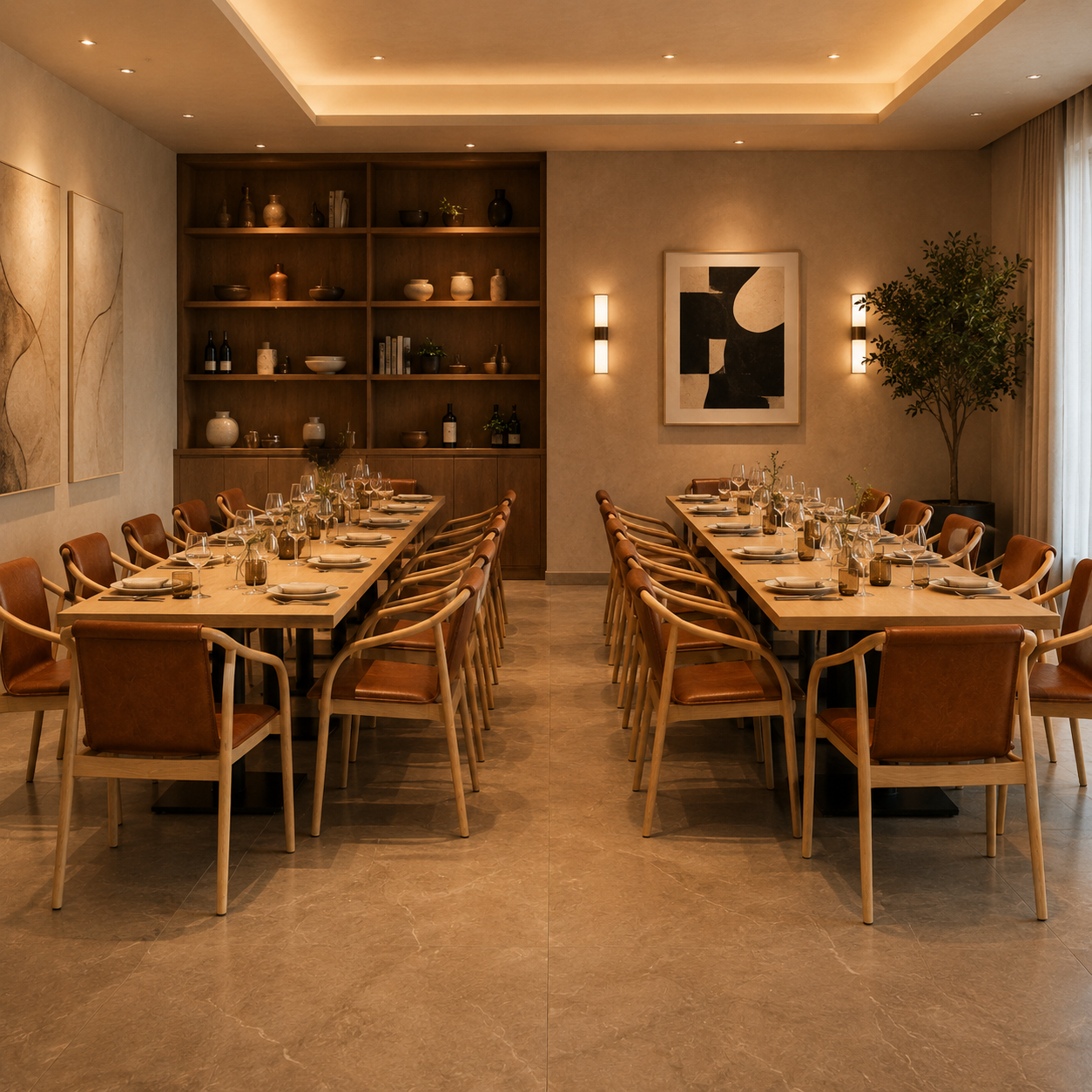
6. Restaurant Chains Need More Consistent Furniture Across Locations
As restaurant businesses expand to multiple locations, furniture purchasing can become more complex.
A chain restaurant may need hundreds of chairs and tables for a new location, followed by additional orders for future openings or replacements.
The challenge is not simply producing a large quantity. The furniture also needs to maintain consistent dimensions, colors, materials, and construction quality across different batches.
This makes standardized commercial restaurant furniture especially relevant to multi-location projects.
For furniture manufacturers, important capabilities include:
- Consistent production specifications
- Repeatable colors and finishes
- Standardized product dimensions
- Reliable batch quality control
- Clear packaging and labeling
- Production planning for repeat orders
A manufacturer that can maintain product consistency may be better positioned to support restaurant chains, hospitality groups, and contractors managing multiple projects.
For B2B buyers, standardization can also simplify purchasing, replacement, and future expansion.
7. Rising Operating Costs Are Making Long-Term Value More Important
Restaurant operators need to manage food costs, labor, rent, utilities, and other operating expenses. Furniture is another investment that must fit within the overall business budget.
However, the lowest purchase price does not always provide the best long-term value.
A chair that requires frequent repairs or replacement may create additional costs over time. Furniture that is easy to clean, maintain, and reorder can be more practical for busy commercial environments.
When evaluating furniture, buyers should consider:
- Initial purchase price
- Expected durability
- Cleaning and maintenance requirements
- Packaging and shipping costs
- Replacement availability
- Consistency across repeat orders
The following table illustrates how two purchasing approaches can differ.
| Purchasing Approach | Main Focus | Potential Consideration |
|---|---|---|
| Lowest-price purchasing | Minimum initial cost | May overlook construction and maintenance |
| Quality-focused purchasing | Materials and manufacturing | Requires careful specification review |
| Long-term value purchasing | Total ownership cost | Considers durability, maintenance, and replacement |
| Standardized purchasing | Consistency across locations | Can simplify repeat orders and inventory planning |
For furniture factories, this trend makes it important to explain the value behind a product rather than competing only on price.
Material specifications, manufacturing processes, quality control, and packaging all help B2B buyers understand what they are paying for.
8. Easy Maintenance Is Becoming a Practical Purchasing Priority
Restaurant furniture is exposed to food spills, drinks, fingerprints, dust, and frequent cleaning. This is especially relevant in busy cafés, fast-casual restaurants, and high-traffic dining areas.
Furniture that is difficult to maintain can add unnecessary work for staff.
As a result, easy-to-clean restaurant tables and chairs can be an attractive option for commercial buyers.
Examples include metal frames with suitable finishes and tabletops designed for routine cleaning. HPL surfaces are one option for many commercial tabletop applications because they are available in practical finishes and are generally easy to wipe clean when maintained according to the manufacturer’s instructions.
The complete product still matters. Edges, joints, upholstery, coatings, and component connections can all influence cleaning and maintenance.
Manufacturers should therefore consider the entire furniture design rather than focusing on a single material.
9. Shipping Efficiency Is Influencing Furniture Product Design
For international furniture buyers, shipping and packaging can significantly affect the total landed cost.
This is particularly important for wholesalers, distributors, and restaurant projects purchasing large quantities.
Product design can influence how efficiently furniture is packed, stored, and transported.
For example, stackable chairs may help improve storage efficiency. Suitable packaging can protect furniture from scratches during transportation. Some table designs can also be packaged more efficiently than others.
For manufacturers, packaging should be considered during product development rather than treated as an afterthought.
Important considerations include:
- Stackability and nesting
- Packaging dimensions
- Protection for painted surfaces
- Assembly requirements
- Container space utilization
- Ease of handling at the destination
Efficient packaging does not automatically guarantee lower shipping costs, because freight also depends on route, shipment volume, weight, and other logistics factors. However, well-planned packaging can help reduce wasted space and protect the order during transit.
For more information, see our article on
10. What These Trends Mean for Commercial Furniture Manufacturers
The trends discussed above affect different parts of the furniture manufacturing business.
They can influence product development, material selection, production planning, quality control, and the way manufacturers communicate with B2B customers.
| Restaurant Industry Trend | Potential Furniture Demand | Manufacturing Implication |
|---|---|---|
| Flexible dining layouts | Stackable and movable chairs | Develop practical, space-efficient designs |
| Outdoor dining | Weather-appropriate furniture | Focus on materials and protective finishes |
| High customer turnover | Durable, easy-maintenance furniture | Maintain consistent frame construction and finishing |
| Smaller dining spaces | Compact tables and chairs | Offer suitable dimensions and configurations |
| Brand-focused interiors | Coordinated colors and finishes | Support practical customization |
| Restaurant chain expansion | Standardized furniture | Improve batch consistency and repeat-order planning |
| Cost pressure | Long-lasting, practical products | Communicate specifications and long-term value |
| International sourcing | Efficient packaging | Integrate packaging into production planning |
For manufacturers like Gold Apple Furniture, these trends reinforce the importance of combining product design, manufacturing capability, quality control, and export experience.
Equipment such as laser cutting machines, stamping machines, robotic welding systems, and powder coating lines can support different stages of metal furniture production. The actual results still depend on product engineering, process control, and inspection.
The goal is to provide furniture that meets the practical requirements of commercial buyers while remaining suitable for efficient production.
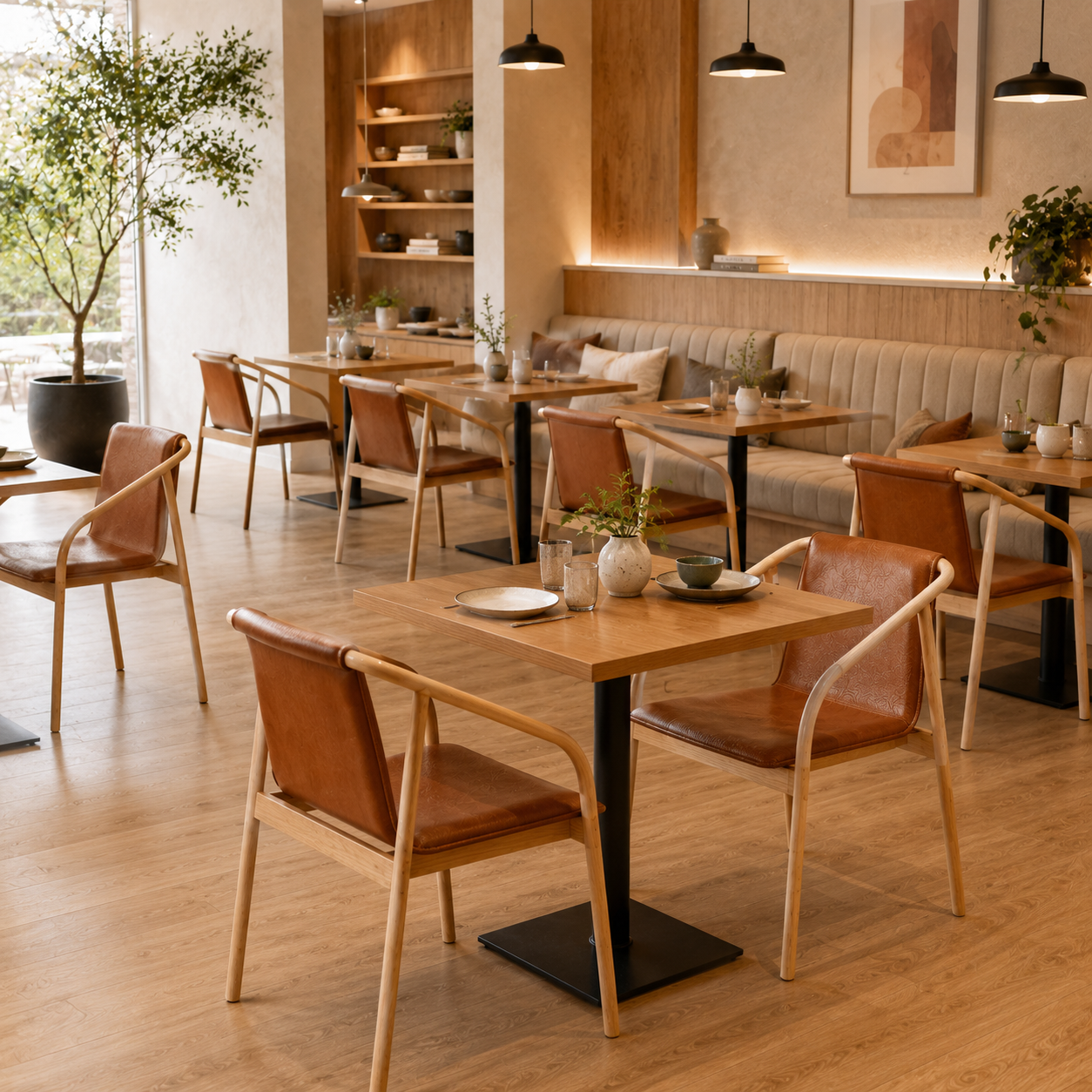
11. How B2B Buyers Can Choose Furniture for Changing Restaurant Needs
Restaurant furniture buyers can use these trends to make more informed purchasing decisions.
Before placing a bulk order, consider the following steps.
Step 1: Define the restaurant concept.
Identify whether the project is a café, fast-casual restaurant, full-service restaurant, hotel, bar, or outdoor dining space.
Step 2: Evaluate the operating environment.
Consider expected customer traffic, cleaning frequency, available floor space, and indoor or outdoor conditions.
Step 3: Select suitable materials.
Compare steel, aluminum, HPL, wood, and upholstery based on their intended use, maintenance needs, and budget.
Step 4: Check manufacturing quality.
Review frame construction, welding, surface treatment, dimensions, and assembly requirements.
Step 5: Plan for logistics.
Consider stackability, packaging dimensions, shipping, and handling requirements.
Step 6: Think about future orders.
For restaurant chains or expanding businesses, ask whether the manufacturer can reproduce the same design, finish, and specifications for future locations.
Step 7: Compare total value.
Evaluate more than the unit price. Include maintenance, shipping, durability, and replacement considerations.
These steps help buyers select furniture that fits both the restaurant’s immediate requirements and its longer-term operational needs.
How Gold Apple Furniture Supports Commercial Restaurant Projects
At Gold Apple Furniture, we understand that restaurant furniture needs to do more than look good. It must also meet the practical requirements of commercial dining spaces.
Our product range includes metal restaurant chairs, restaurant tables, dining sets, outdoor furniture, bar furniture, and metal table bases for restaurants, cafés, bars, hotels, and other commercial applications.
Our manufacturing capabilities include laser cutting, stamping, robotic welding, and powder coating. Depending on the product, buyers can explore different frame designs, seat materials, colors, and finishes to suit their projects.
For wholesalers, restaurant groups, interior designers, and project contractors, a coordinated furniture supplier can help simplify product selection and purchasing across different categories.
Explore our product collections:
- Commercial Restaurant Furniture
- Restaurant Tables and Chairs
- Outdoor Restaurant Furniture
- Commercial Metal Table Bases
Final Thoughts
Restaurant industry trends influence more than menus and interior design. They also shape what businesses expect from their furniture suppliers.
Flexible dining layouts create demand for adaptable furniture. Outdoor dining makes material selection and surface protection more important. Restaurant chain expansion increases the need for consistent products, while operating cost pressures encourage buyers to consider long-term value rather than initial price alone.
For commercial furniture manufacturers, understanding these changes can help guide product development, production planning, and customer service.
For B2B buyers, the same knowledge makes it easier to choose furniture that matches their restaurant concept, operating conditions, and purchasing goals.
The most useful approach is to connect every furniture decision to a real business need—whether that means durability, easy maintenance, flexible layouts, brand consistency, or efficient shipping.
As restaurant concepts continue to evolve, manufacturers that understand both furniture production and the practical needs of restaurant operators will be better prepared to serve the commercial market.
Frequently Asked Questions
What restaurant trends are influencing commercial furniture demand?
Key trends include flexible dining layouts, outdoor dining, space-efficient restaurant design, brand-focused interiors, chain restaurant expansion, easy maintenance, and greater attention to long-term purchasing value.
How does outdoor dining affect restaurant furniture manufacturing?
Outdoor dining increases the importance of choosing appropriate materials, protective finishes, and practical designs. Manufacturers need to consider the intended climate and exposure conditions when developing outdoor restaurant tables and chairs.
Why do restaurant chains need standardized furniture?
Standardized furniture helps restaurant chains maintain a consistent appearance across locations. It can also simplify bulk purchasing, replacement, inventory management, and repeat orders.
What furniture is suitable for high-traffic restaurants?
High-traffic restaurants generally benefit from furniture with reliable frame construction, durable finishes, practical tabletops, and manageable cleaning requirements. The best choice depends on the restaurant concept and operating environment.
How can furniture manufacturers respond to changing restaurant trends?
Manufacturers can review product designs, materials, production processes, packaging, and customization options to address changing buyer requirements. Maintaining consistent quality and communicating product specifications are also important.
What should B2B buyers consider when purchasing commercial restaurant furniture?
Buyers should consider material suitability, construction quality, comfort, maintenance, dimensions, customization, MOQ, lead time, packaging, shipping, and the supplier’s ability to support future orders.
Why is long-term value important when buying restaurant furniture?
Furniture affects both initial purchasing costs and ongoing maintenance or replacement expenses. Comparing durability, maintenance needs, shipping, and replacement availability can help buyers evaluate the overall value of a purchase.
Post time: Oct-15-2026